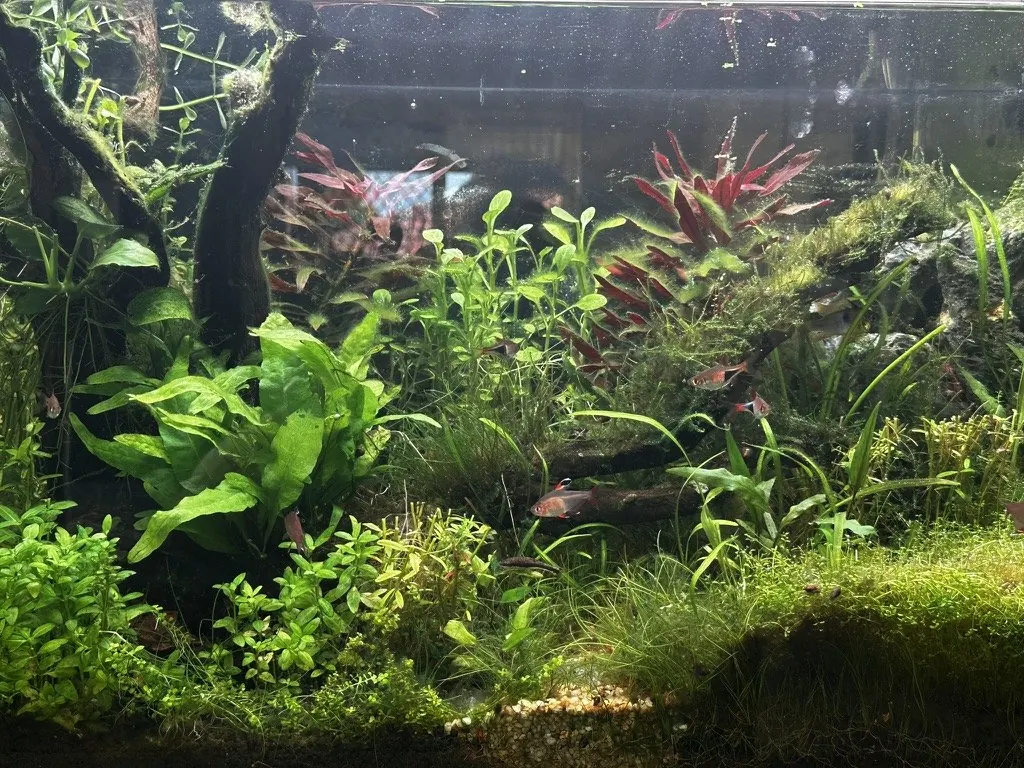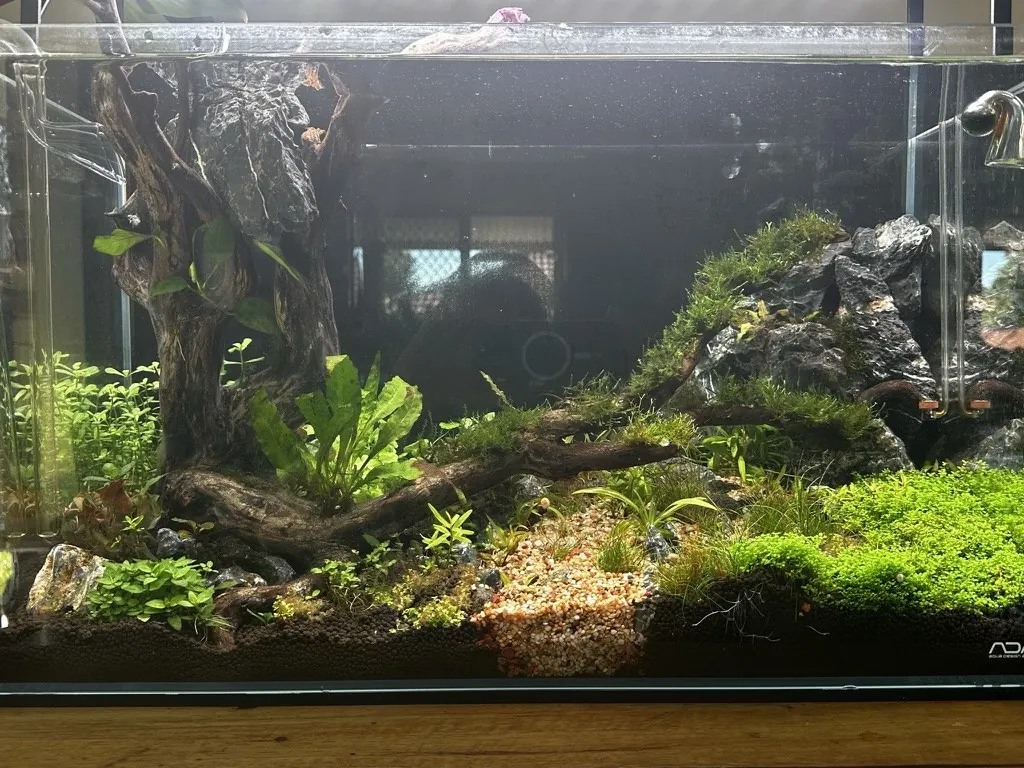
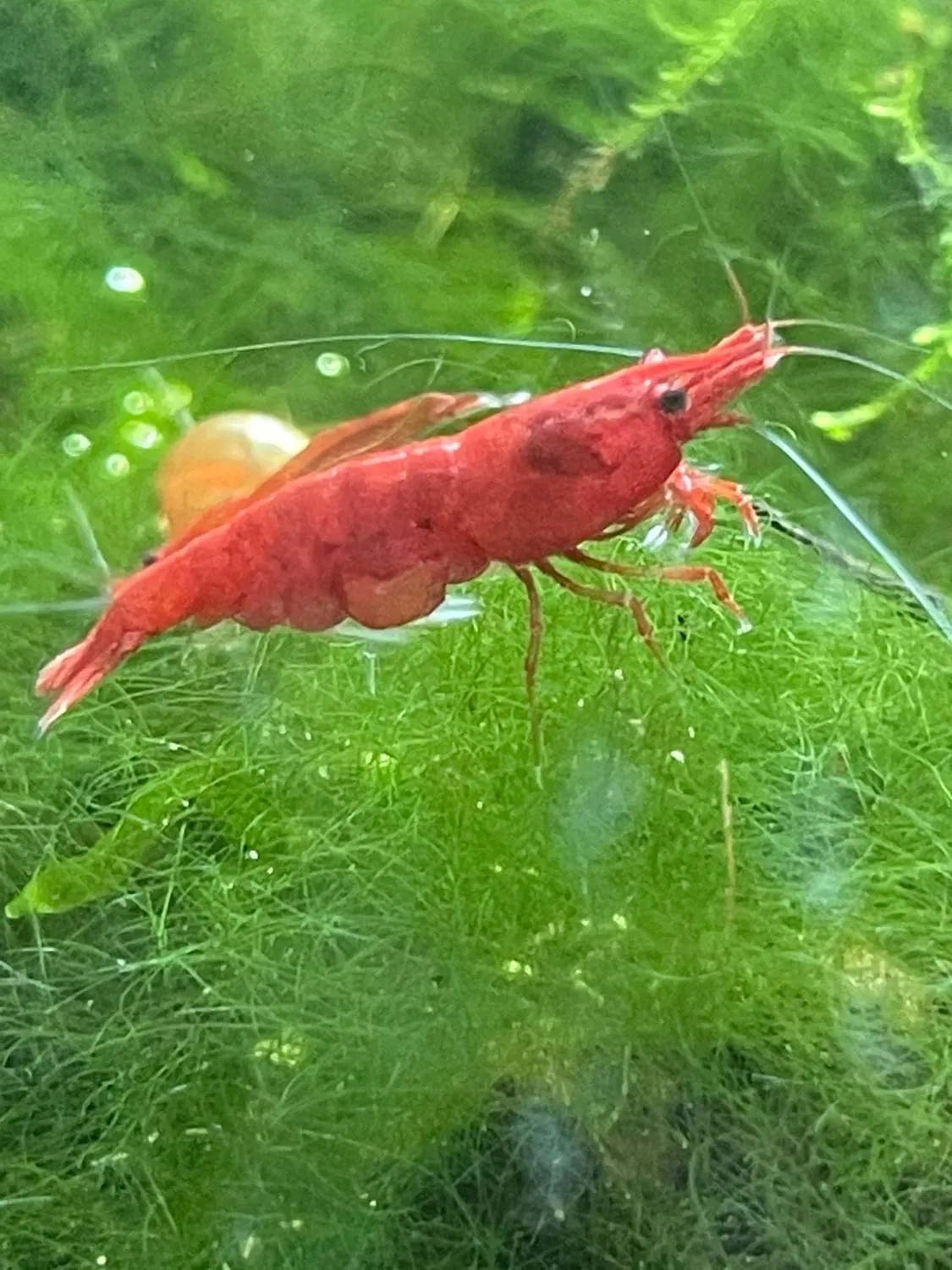
When I’m not out on visits I breed ornamental shrimp at home — cherries, blue velvets, bloody marys, yellows. If you’ve kept them you’ll know the truth of it: shrimp aren’t hard, but they are unforgiving. Get the water right and they thrive and breed almost on their own; get it wrong and they quietly fade. So this one’s all about the water — the part that actually makes or breaks a shrimp tank.
Why it’s all about the water
Shrimp are tiny, thin-shelled, and moult their whole skeleton to grow. They have almost no buffer against change. A fish might shrug off a swing in hardness; a shrimp fails its next moult and dies. So with shrimp you’re not really keeping animals — you’re keeping water, and the shrimp come along for the ride. Three numbers do most of the work.
The three numbers: TDS, GH and KH
- TDS (Total Dissolved Solids) — the overall mineral load, read in ppm off a cheap TDS pen. It’s your quick daily health-check. Neocaridina (cherries, velvets, yellows) sit happily around 150–250 ppm; the fussier Caridina (crystals, bees) want 80–150.
- GH (General Hardness) — calcium and magnesium, the minerals shrimp build their shells from. Too low and you get failed moults (the dreaded “white ring of death”). Neocaridina like GH 6–8, Caridina 4–6. This is the number people neglect and pay for.
- KH (Carbonate Hardness) — the buffer that holds your pH steady. Neocaridina want a little (KH 2–5, pH ~7–8). Caridina want KH at 0 and an active soil that pulls the pH down to ~6. KH is really a pH-stability dial.
A GH/KH drop-test kit and a TDS pen cost very little between them and tell you everything. Guessing from how the tank looks doesn’t work with shrimp.
Two families, two waters
The single biggest beginner trap is treating all shrimp the same. Neocaridina (cherry, blue velvet, yellow — what I breed) are hardy and happy in harder, neutral-to-alkaline water; you can run them on dechlorinated tap plus a remineraliser. Caridina (crystal red/black, bees) need soft, acidic water — RO water, a shrimp remineraliser, and an active buffering soil. Don’t try to keep both in one tank, and don’t follow crystal-shrimp advice for cherries or vice versa.
With shrimp you’re not really keeping animals — you’re keeping water. Get that right and they mostly look after themselves.
Build your water, don’t just pour tap
The trick that transforms a shrimp tank is remineralising: start from near-zero water (RO or clean rainwater), then add a shrimp-specific remineraliser back to a target TDS. That gives you the exact same water every single change — and consistency is the whole game. Tap water is fine for neocaridina if it’s dechlorinated and stable, but it drifts with the seasons and can carry copper or other metals that shrimp hate. For repeatable results, RO + remineraliser is the gold standard.
Stability beats perfection
Shrimp handle a slightly wrong but steady number far better than a perfect number that jumps around. So: small, frequent water changes with water that’s matched for temperature and TDS, dripped in slowly. Never tip in a big change of different water — a sudden shift in TDS or GH can set off a mass moult and wipe a colony overnight. Slow and steady, always.
The rest of the essentials
Water is most of it, but not all: a properly cycled tank (ammonia and nitrite at zero), a gentle sponge filter (won’t suck up babies), a stable temperature around 22–24°C (cooler runs slower but hardier — handy through a Brisbane summer), plenty of biofilm and mature plants/moss to graze, and light feeding. Overfeeding is the other great shrimp-killer — they graze all day and need very little from you.
Read it off the shrimp
The shrimp tell you how you’re doing. Grazing busily all day means happy, well-mineralised water. Failed moults or a white ring across the shell means GH too low, or a swing they couldn’t cope with. And the real scoreboard: berried females and tiny shrimplets appearing — shrimp only breed when they’re genuinely comfortable, so babies mean you’ve nailed it.
A few of my colonies
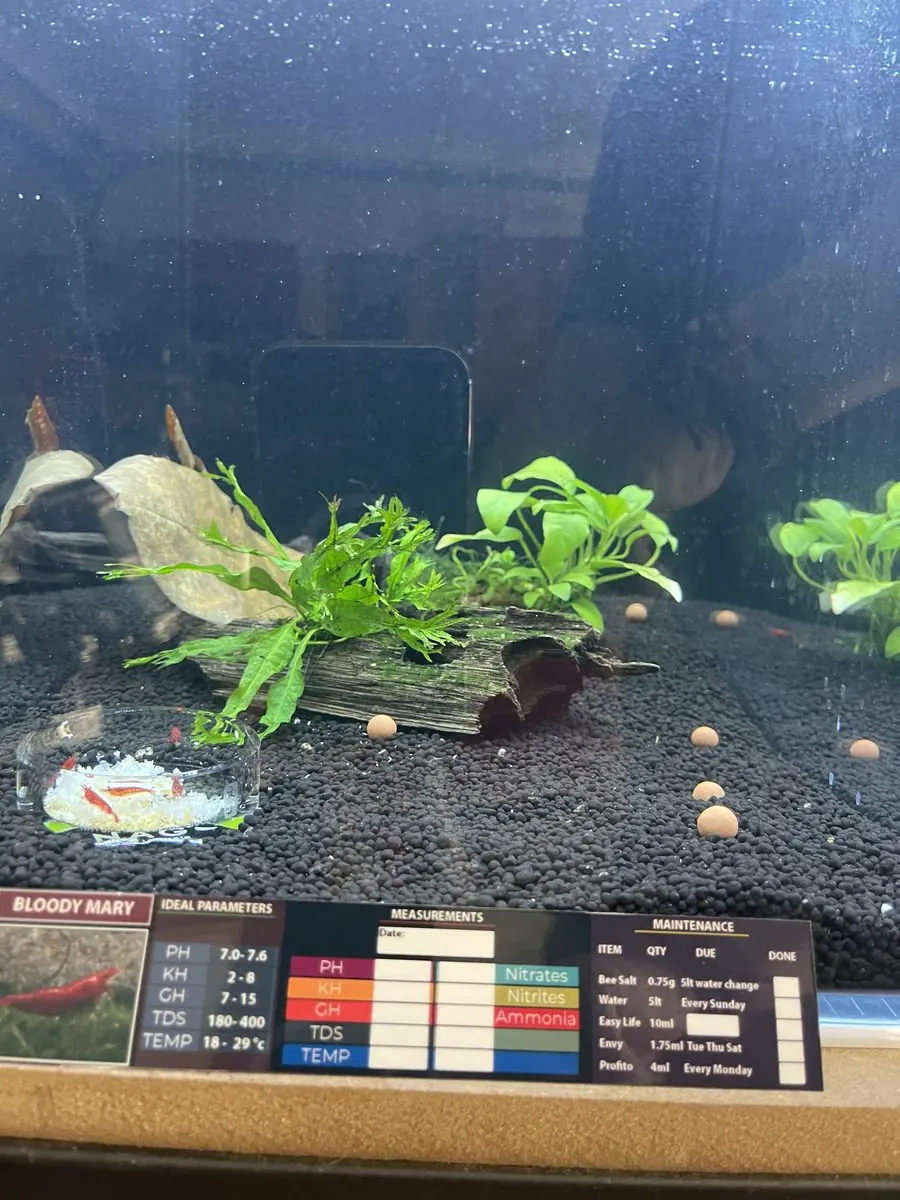
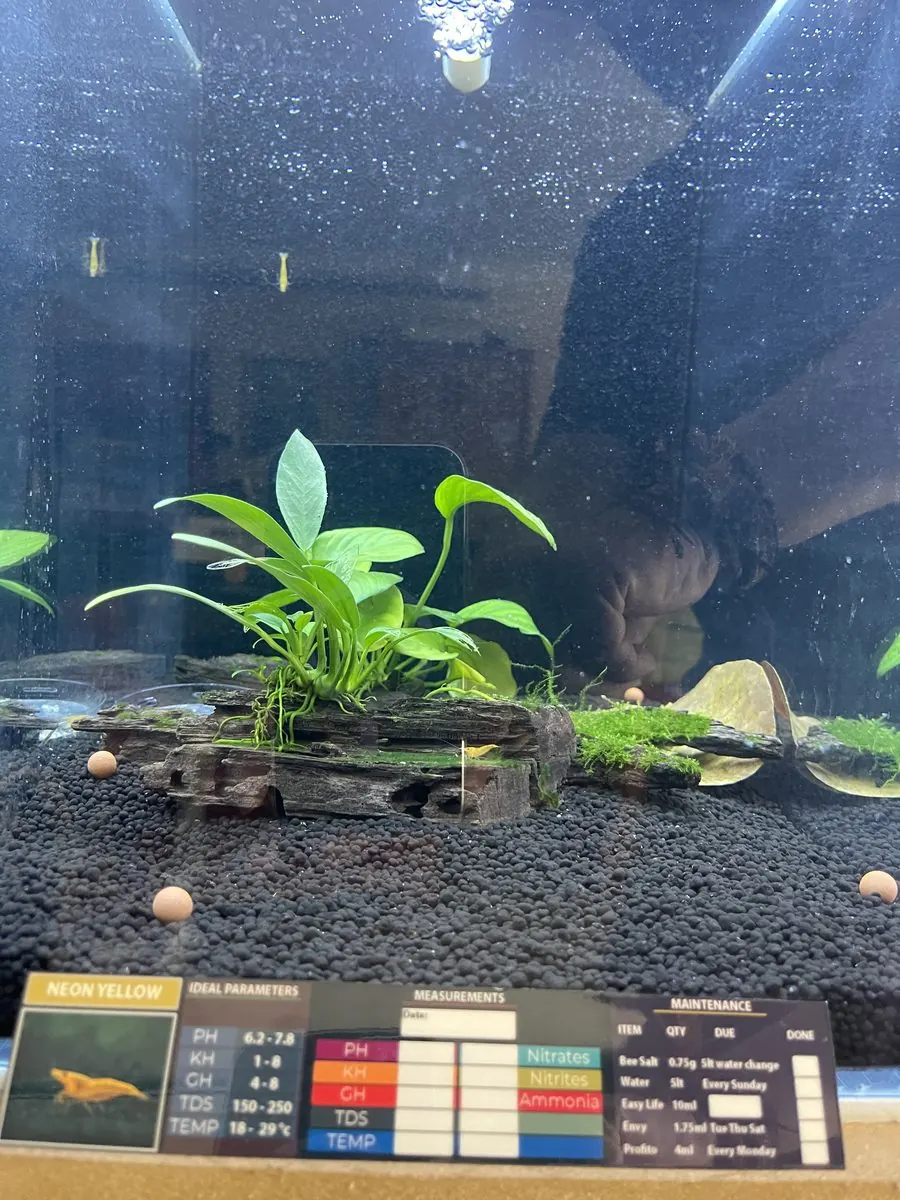
The neocaridina lines I keep and breed at home. Tap any photo to enlarge.
Leaving a shrimp tank with a sitter
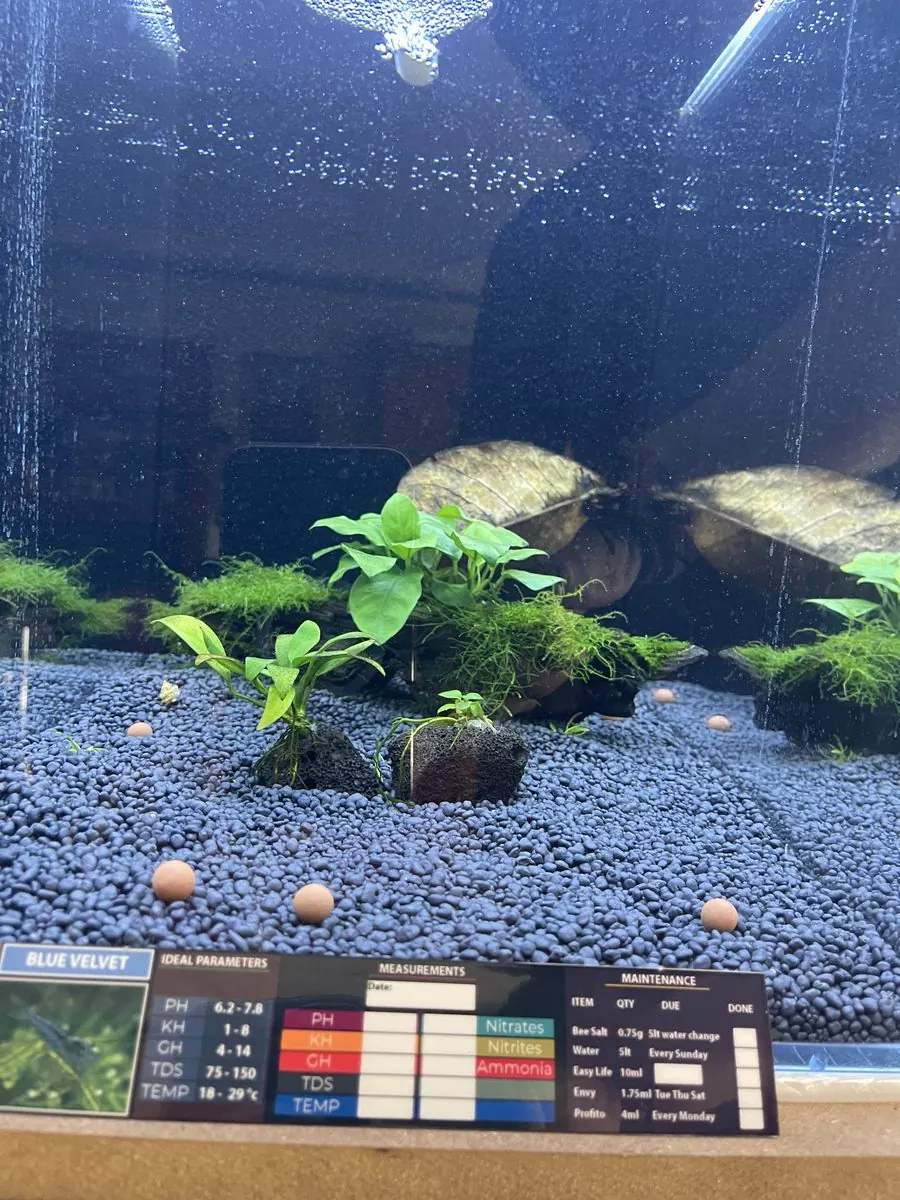
Here’s the good news: a settled shrimp colony is one of the easiest things to leave while you travel — as long as your sitter understands the golden rule, which is do less, not more. Pre-portion the food (they graze biofilm and need barely any), keep the temperature stable, and top up evaporation with RO or dechlorinated water — never a big water change while you’re away. When I mind shrimp I check the TDS, the temperature and the water level, top up gently for evaporation, and otherwise leave them be. With shrimp, the person who fiddles least does best — and that’s exactly the kind of hands-off, know-what-you’re-doing care they need.
Get the water right and stable, resist the urge to tinker, and shrimp are the most rewarding little livestock in the hobby — a self-sustaining colony quietly breeding away in the corner of the room.
Fish, reptiles & exotics
The pets others won’t take.
Aquariums, reptiles, birds and small pets — I’m happy with the animals a lot of sitters turn away. Book a free meet & greet across Western Brisbane & Ipswich.
Book a meet & greet