A fish tank is the one pet that looks like it’ll be fine on its own — it’s quiet, it’s behind glass, and nothing’s scratching at the door. But a tank is a small, living system, and a week with no one watching is exactly where a tiny problem has time to become a big one. I’ve kept and aquascaped planted tanks for years and bred ornamental shrimp, so a tank that needs minding while its owner is away is something I actually enjoy — and know what to look for in.
“Can’t I just use an auto-feeder?”
For a couple of days with a hardy, lightly-stocked tank, sure. But an auto-feeder solves exactly one job — dropping food — and it can quietly cause another, because it has no idea if it jammed and tipped a week’s worth in at once. Overfeeding is the single most common way a tank crashes: the extra food rots, ammonia spikes, and by the time you’re home the water’s cloudy and the fish are struggling. A feeder also can’t top up evaporation, can’t tell you the filter has stopped, can’t see a fish gasping at the surface, and can’t remove the one that didn’t make it before it fouls everything. For a week away — or any planted or well-stocked tank — a real set of eyes every few days is cheap insurance.
What actually needs doing
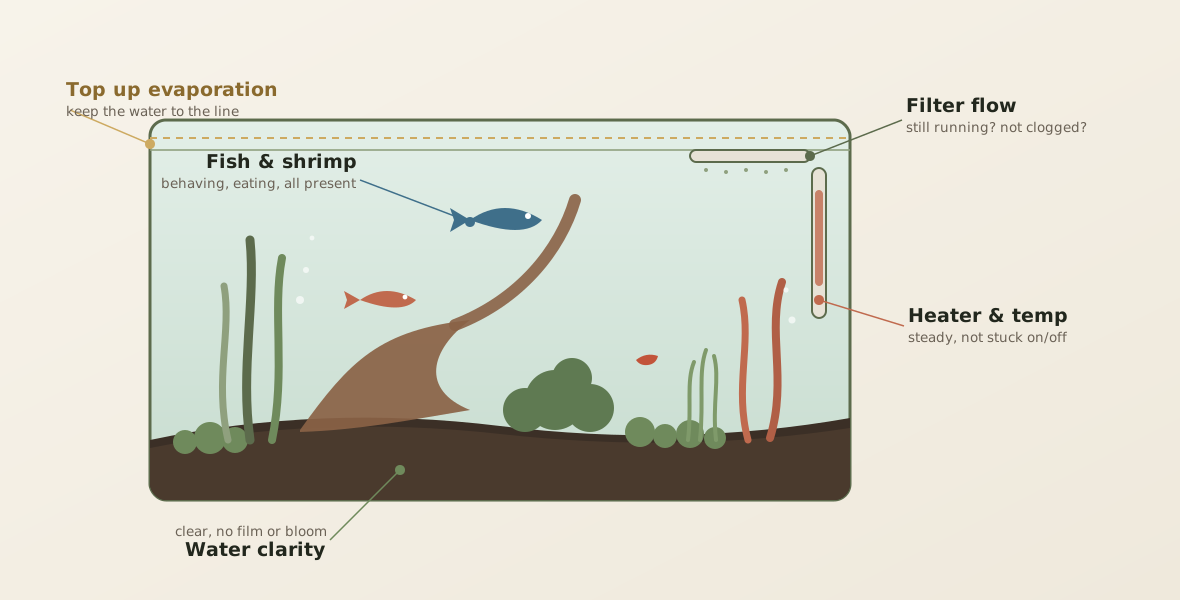
It’s less than people fear, but it’s the right handful of things — the five in the picture above are what I run through on every single visit:
- Feeding, and the right amount. A small pinch to your instructions. With fish, going a touch light for a few days is far safer than overdoing it — a healthy fish is perfectly fine skipping the odd meal.
- Topping up evaporation. Tanks lose water over a week, and as the level drops everything in the water concentrates. I top it back up to the line with dechlorinated water, never straight from the tap.
- A quick equipment check. Filter still running and flowing, heater holding its temperature, lights coming on and off on their timer.
- Everyone present and behaving. Fish eating and swimming like themselves, no one hiding in a corner or hanging at the surface, and nothing left in the tank that shouldn’t be.
- Water looking right. Clear, not cloudy or filmed over, and no sudden algae bloom.
The things that quietly go wrong in a week
None of these are dramatic on day one. They’re a real problem by day five:
- A heater fails — stuck off and the tank chills, or stuck on and it slowly cooks. Tropical fish don’t get many chances with either.
- The filter clogs or stops — flow drops, oxygen drops, and the good bacteria that keep the water safe start to die back.
- A fish passes away unnoticed — one small body can foul an entire tank, and faster in a Brisbane summer.
- Overfeeding — usually the auto-feeder, and the classic cause of an ammonia spike.
- A power blip trips the board over the weekend and nothing comes back on.
Every one of these is a five-minute fix if someone’s there to catch it, and a heartbreak if no one is.
A tank is a living picture. It just needs someone who knows what they’re looking at.
What I do on a visit
I feed to your notes, top the water up, and run through that checklist — filter, heater, temperature, and a proper look at every fish. Anything that shouldn’t be in there comes out. Then you get a photo and a short note, the same as any other visit, so from wherever you are you can see your tank’s ticking along happily.
Before you go: set your tank up to coast
A few minutes before you leave makes the whole week easier.
- Do a water change a day or two before you leave, so the trip starts with clean water.
- Give the filter a gentle rinse (in old tank water, never tap) so it doesn’t clog mid-week — but don’t deep-clean it, or you’ll knock out the good bacteria.
- Check the heater’s holding temperature and your lights are on a timer.
- Pre-portion the food into little daily lots, or leave very clear “this much, this often” instructions.
- Leave your water conditioner out where I can find it, and note anything unusual about your setup.
- Walk me through it at the free meet & greet — every tank has its quirks, and I’d rather learn yours before you’re away, not while you are.
Fish are easy to look after and easy to lose, and the difference is almost always just someone paying attention. If you’re heading away and your tank can’t come with you, I’m happy to keep an eye on it.
Going away soon?
Your tank, in good hands.
Book a free meet & greet and I’ll keep your fish fed, your water topped up and your tank running smoothly while you’re away — across Western Brisbane & Ipswich.
Book a meet & greet