Dogs are easier to read than cats, but there’s still more going on than a wagging tail. Once you know what a genuinely happy, relaxed dog looks like — and the quieter signs worth a second look — you can tell at a glance how yours is really doing.
A loose, whole-body wag
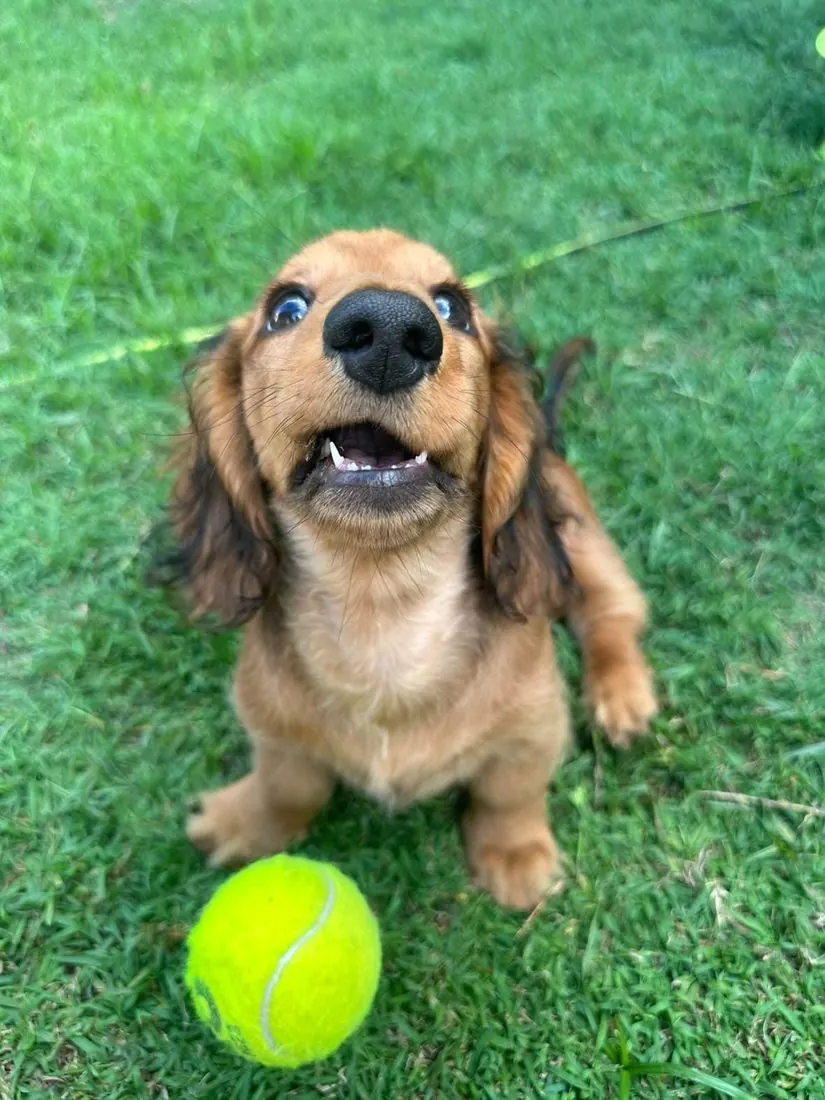
A happy tail is loose and swishy, often with the whole back end going with it. Watch the quality of the wag, though, not just the fact of it: a high, stiff, fast flag can mean a dog is worked up or unsure rather than friendly, and a low or tucked tail says they’re worried. Relaxed and waggy from the shoulders back is the one you want.
A soft face
A content dog has a soft, open mouth — that loose “smile” — easy eyes, and ears sitting in their natural position. The signs to notice on the other side are a hard stare, a tight closed mouth, lots of lip-licking or yawning when they’re not tired, or “whale eye” (the whites showing as they look sideways). Those all say give me a bit of space.
Play bows and the zoomies
Front end down, bottom in the air, tail going — the play bow is a dog inviting a game, and it’s about as clear a “I’m happy” as you’ll get. So are the zoomies: those sudden mad laps of the yard or the lounge are just pure joy and a bit of energy being let off.
They want to be near you
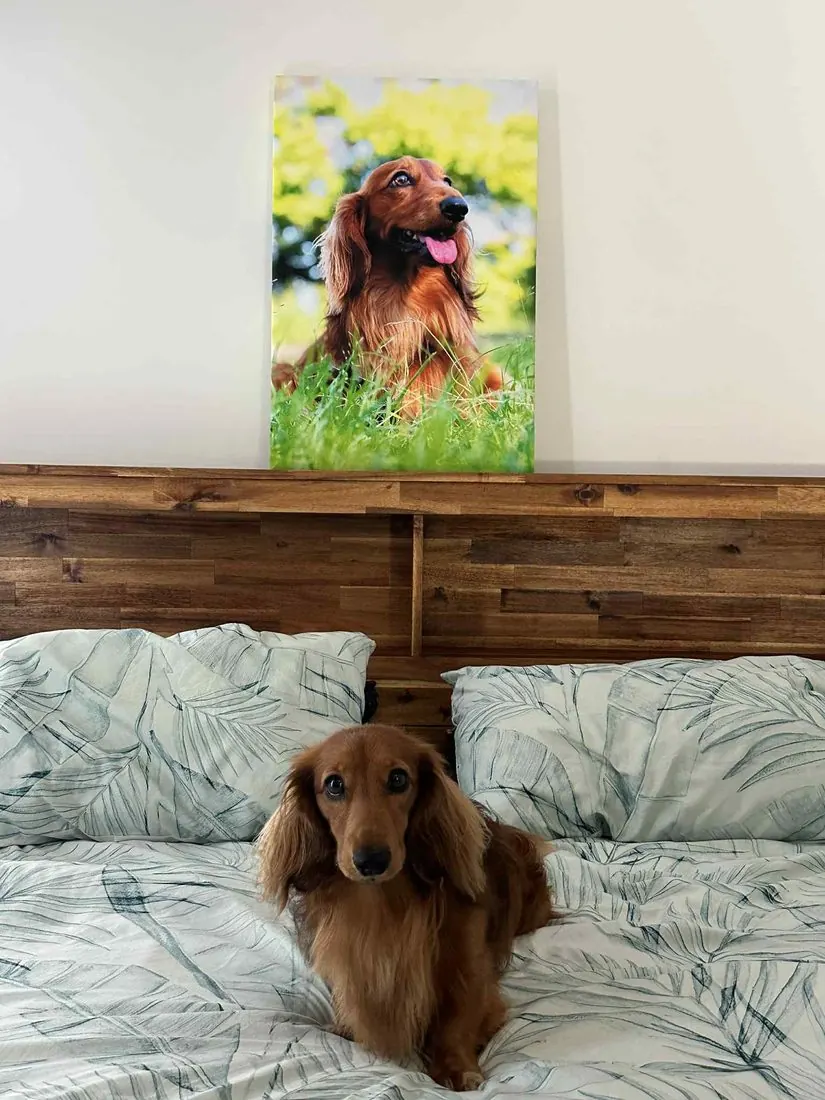
A settled dog seeks your company — leaning on your leg, flopping down near you, following you from room to room. It’s not neediness; it’s a dog that feels safe and part of the family. When I’m visiting a dog while their people are away, one of the nicest signs things are going well is when they stop watching the door and just come and settle beside me.
Eating and sleeping well
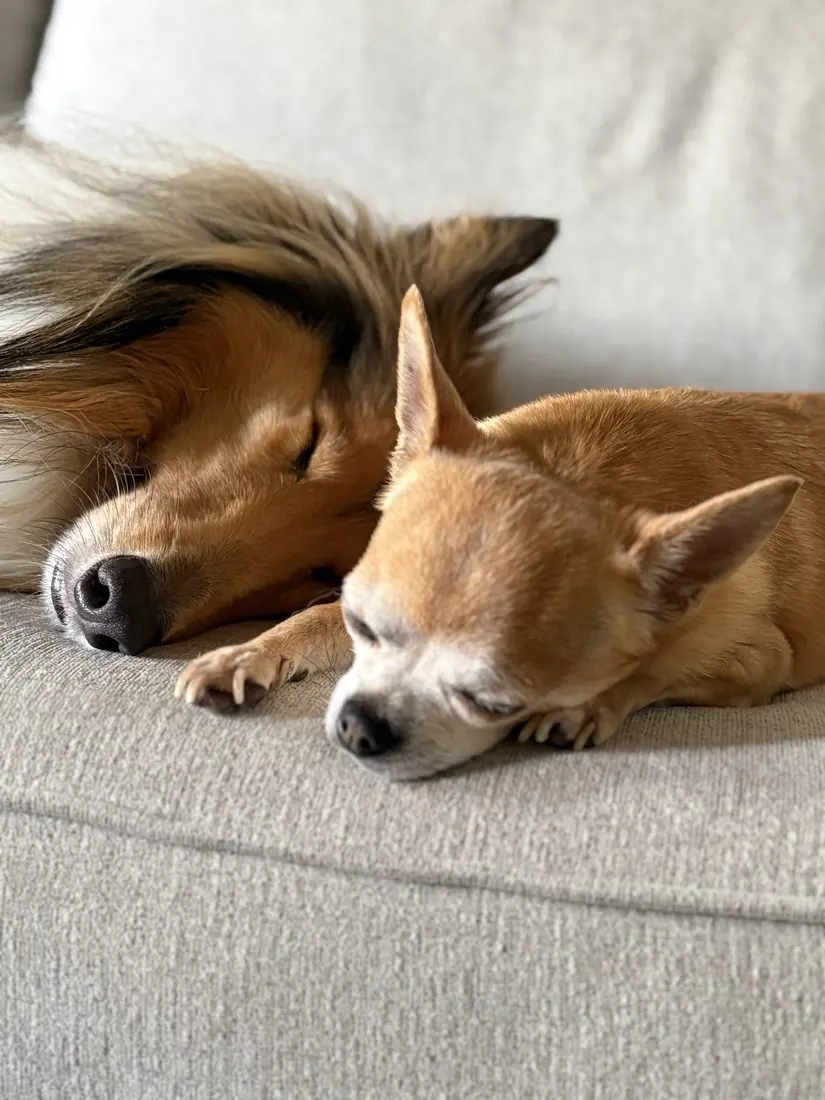
Two of the quietest signs of a happy, healthy dog are the easiest to overlook: a normal appetite and good, sound sleep. A dog that’s eating and resting like their usual self is usually a dog that’s doing just fine.
A happy dog isn’t just a wagging tail — it’s a loose, easy body and a dog that wants to be near you.
When to look a little closer
The thing to watch for is a change from their normal: suddenly hiding, going off their food, pacing or restlessness, panting when it’s not hot, licking one spot over and over, or a change in their toileting. Any sudden shift in behaviour is worth a chat with your vet — dogs are stoic, and a change is often the first sign something’s up. It’s exactly the kind of thing I keep an eye on when I’m looking after your dog, and the first thing I’d flag to you.
Know their normal
Every dog’s “happy” looks a little different — some are wrigglers, some are leaners, some just quietly park themselves at your feet. The main thing is knowing what normal looks like for yours, so that on the rare day it changes, it stands out.
Going away soon?
Walks and wags, sorted.
Book a free meet & greet and I’ll keep your dog on their normal routine — walks, feeds and company — in their own home across Western Brisbane & Ipswich.
Book a meet & greet